Cart
0
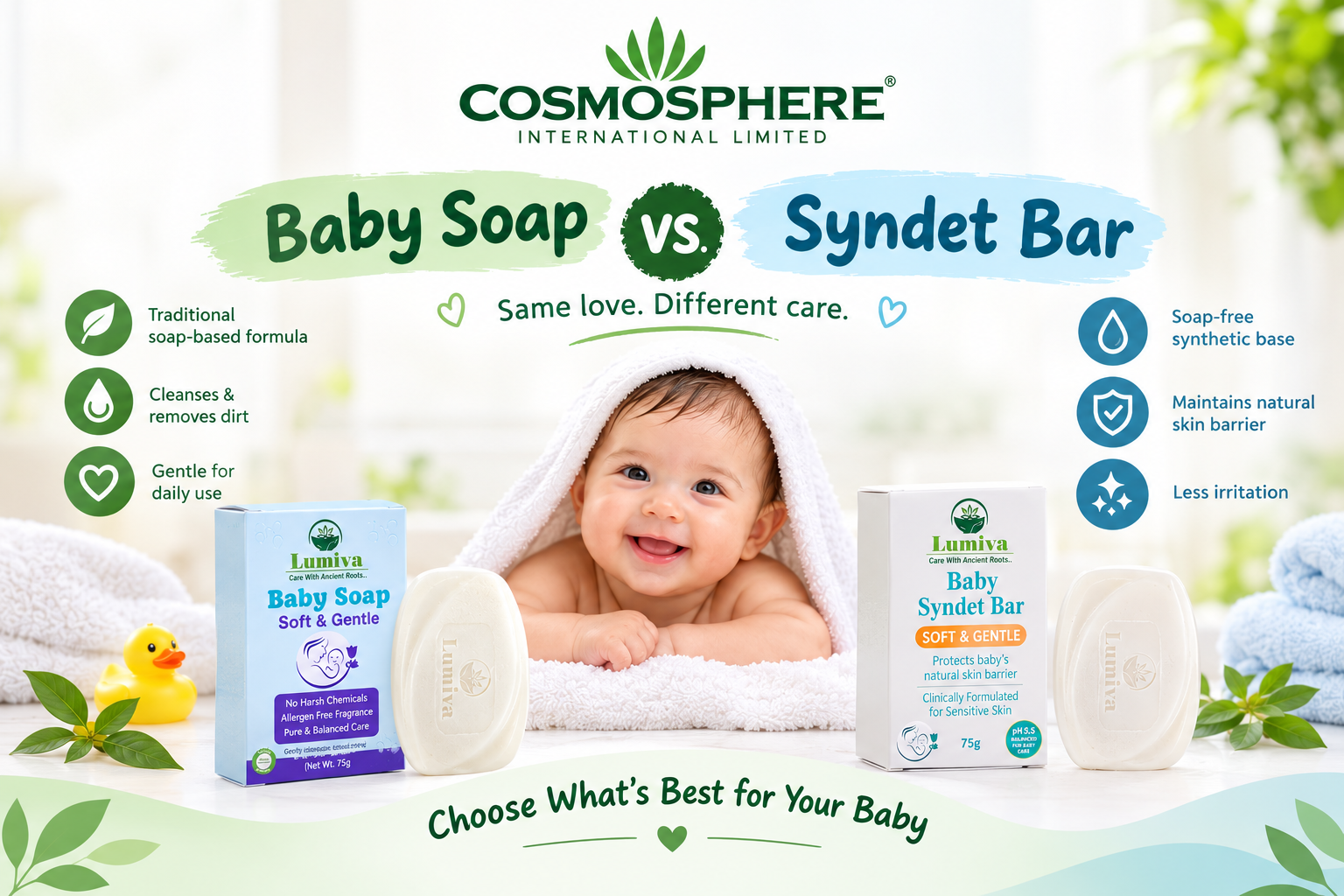
Syndet bars are gentler on sensitive baby skin than regular baby soap. Baby soap is usually alkaline, with a pH of 9 to 10, and can strip natural oils. Syndet bars sit closer to skin's own pH of about 5.5, so they clean without disturbing the skin barrier as much.
If your baby's skin turns red, flaky, or itchy after bath time, the cleanser could be why. Here's what actually separates a syndet bar from ordinary baby soap, and how to pick between them.

What Is a Syndet Bar?
"Syndet" is short for synthetic detergent. The name sounds harsh, but syndet bars are made from mild, plant-derived surfactants rather than the fats and lye used to make traditional soap.
Because syndet bars skip saponification, the chemical reaction that turns fat into soap, they can be formulated at a pH close to skin's own level, around 5.5. That keeps the skin's protective acid mantle intact, which matters more for babies than adults since a baby's skin barrier is still developing.
What Is Traditional Baby Soap?
Most baby soap is made by combining fats or oils with an alkali, usually sodium hydroxide, in a process called saponification. The result is an effective cleanser, but a naturally alkaline one, typically landing at pH 9 to 10.
That higher pH gives baby soap its classic lather and squeaky-clean feel. It also disrupts a baby's acid mantle more than a syndet bar does, temporarily raising skin pH and making it easier for irritants and bacteria to get through.
Baby Soap vs. Syndet Bar: Key Differences
|
Factor |
Baby Soap |
Syndet Bar |
|
pH level |
Alkaline (9 to 10) |
Skin-neutral (about 5.5) |
|
Cleansing base |
Fats plus alkali (saponified) |
Mild synthetic surfactants |
|
Effect on skin barrier |
Disrupts acid mantle |
Preserves acid mantle |
|
Moisture retention |
Can strip natural oils |
Retains more natural moisture |
|
Lather |
Fuller, more traditional |
Lower, creamier |
|
Best suited for |
Normal, resilient skin |
Sensitive, dry, or eczema-prone skin |
Why pH Matters for Baby Skin
A newborn's skin barrier isn't fully mature until around age one. Baby skin is thinner than adult skin, loses moisture faster, and has a less stable acid mantle. That's part of why dermatologists often recommend pH-balanced, syndet-based cleansers for infants instead of standard baby soap.
Regular use of alkaline baby soap can:
-
Strip the natural lipid barrier that locks in moisture
-
Raise skin surface pH, which weakens the skin's defense against bacteria
-
Increase dryness, redness, and flare-ups in babies prone to eczema
Which Is Gentler on Sensitive Skin?
For most babies with sensitive, dry, or eczema-prone skin, a syndet bar is the gentler choice. Its lower, skin-matching pH means less disruption to the barrier and less moisture loss with every wash.
That doesn't mean baby soap is off the table for every child. A baby with resilient, non-reactive skin may do fine with a well-formulated, mild baby soap. The deciding factor isn't the label on the package. It's how the baby's skin actually responds after a few washes.
Signs Your Baby's Skin Needs a Syndet Bar
Consider switching to a syndet bar if the baby shows:
-
Redness or tightness right after bathing
-
Flaky or rough patches, especially on the face, elbows, or knees
-
A history of eczema, cradle cap, or diaper rash
-
Skin that feels dry within a few hours of bath time
How to Choose the Right Cleanser
When comparing baby soap and syndet bar options, check for:
-
pH labeling. Look for a stated pH around 5.5.
-
Short ingredient lists. Fewer synthetic fragrances and dyes usually means lower irritation risk.
-
Tear-free, hypoallergenic claims. Worth noting, but confirm the pH too.
-
Dermatologist-tested certification. A sign the formula has been evaluated for infant skin safety.
-
No sulfates or parabens. Lowers the chance of dryness or sensitization on delicate skin.
Frequently Asked Questions
Is syndet soap safe for newborns?
Yes. Syndet bars are one of the safest cleansing options for newborns because syndet pH closely matches skin's natural acidity, which limits irritation on a still-developing skin barrier.
Can I use adult soap on my baby instead of baby soap?
Using adult soap on a baby is best avoided. Adult soap is typically more alkaline than baby soap and often contains fragrances or additives not suited to infant skin, even for occasional use.
Does a syndet bar lather less than baby soap?
Yes. Syndet bars produce a softer, creamier lather than the heavier foam typical of baby soap. The lighter lather comes from milder surfactants, not from weaker cleaning power.
How do I know if a product is a syndet bar and not baby soap?
Check the ingredient list for terms like sodium cocoyl isethionate or cocamidopropyl betaine, rather than sodium tallowate or saponified oils. A stated pH near 5.5 on the packaging is another good indicator of a syndet bar.
Is baby soap bad for newborn skin?
Baby soap isn't inherently bad for newborn skin, but its higher, alkaline pH makes it more likely than a syndet bar to disrupt a newborn's developing skin barrier with regular use, especially on skin that's already dry or sensitive.
The Bottom Line
If a baby has sensitive, dry, or reactive skin, a syndet bar is generally the safer choice over regular baby soap. It cleanses just as effectively while respecting the skin's natural pH and moisture barrier. Baby soap isn't automatically harmful, but for delicate newborn skin, a pH-balanced formula removes one variable to worry about.