Cart
0
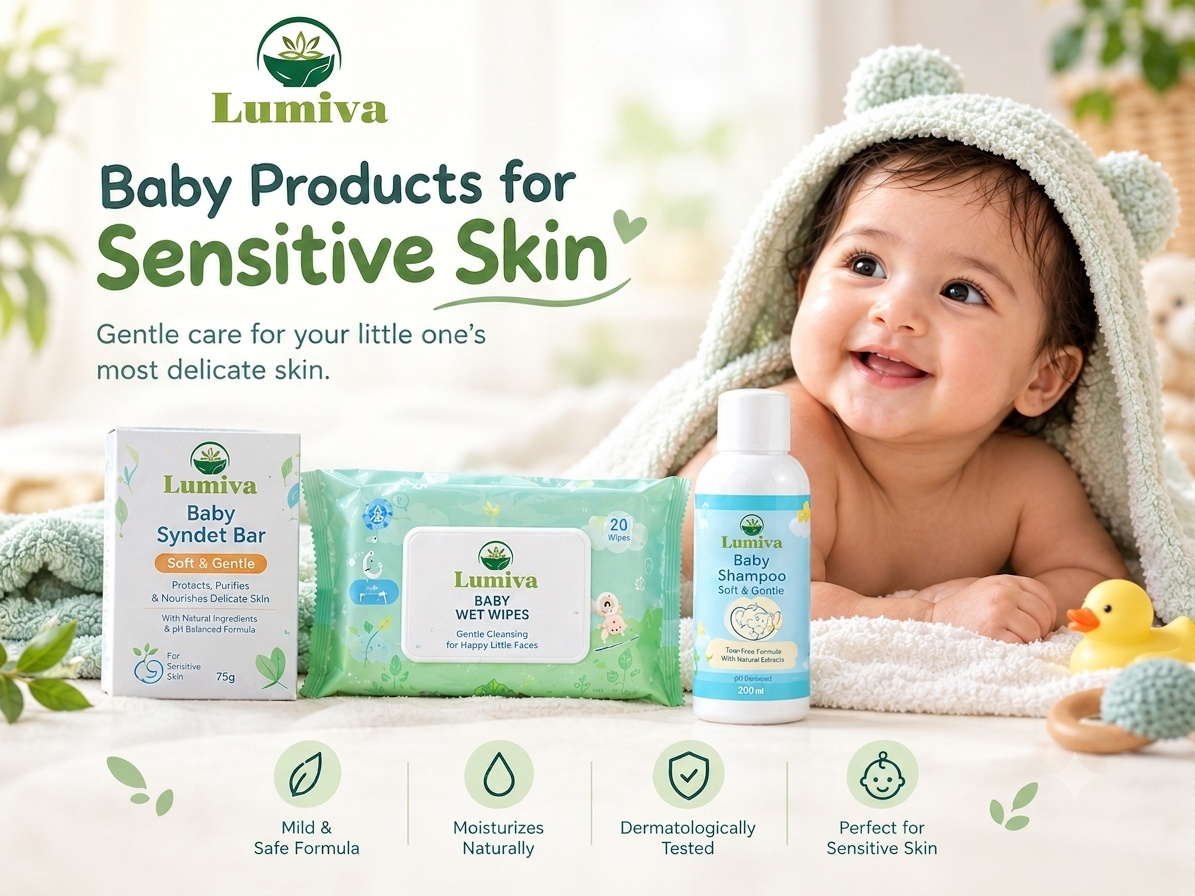
Choosing baby products for sensitive skin starts with a few well-chosen essentials and attention to how your baby’s skin responds. A label such as “natural,” “hypoallergenic” or “dermatologically tested” can provide information, but no single phrase guarantees that a baby product will suit every child. The finished formula, directions for use and your child’s individual needs matter most.
Babies can develop dryness or a rash for many reasons, including bathing habits, weather, friction and skin conditions. If a reaction is persistent, widespread or getting worse, speak with your paediatrician rather than repeatedly changing products.
Recognising when skin needs extra care
Some babies develop dry patches, redness or discomfort after a product is introduced. Notice when a change began, where it appeared and which products touched that area. A family history of eczema or allergies is useful information to share with a clinician, but it does not diagnose a skin condition on its own. Reactions can appear hours or days later, so the timing may not identify the cause with certainty.
What to check when buying baby products
Purpose and age guidance
Choose a product intended for a baby’s age and for the area where it will be used. A wash, lotion, wipe and powder have different jobs. Follow the pack directions, especially for newborn use and contact with the eyes.
Fragrance and the full formula
For babies with eczema or known fragrance sensitivity, a fragrance-free option is often preferred. “Natural” fragrance and essential oils can still cause reactions. Check the ingredient list for an ingredient your child has reacted to before; a short list alone is not proof that a product is gentler.
Claims and testing
Terms such as “tear-free,” “hypoallergenic” and “dermatologically tested” should be read in the context of the specific product. Tear-free is relevant to products that may reach the eyes. A testing claim does not mean that no baby can react. If you want to understand a claim, look for information from the brand about what was tested.
Cleanser pH
Many traditional soaps are alkaline, while syndet cleansers can be formulated closer to skin pH. The pH of the particular finished product is more useful than assuming that every soap or every syndet behaves the same way. pH is one part of a cleanser’s overall formulation.
Choosing baby products by category
Baby wash and soap
Use a mild cleanser sparingly and rinse it well. A syndet bar may suit some babies with dry skin, while a well-formulated baby soap may suit others. If bathing leaves the skin feeling dry, review the cleanser and bathing routine with your paediatrician.
Moisturiser
For dryness, choose a baby-appropriate moisturiser that is comfortable on the skin. Children with eczema often benefit from a fragrance-free cream or ointment after bathing; a thin lotion may not provide enough moisture for very dry skin. Oils, shea butter and aloe are ingredients to evaluate within the complete formula, not guarantees of a particular result.
Shampoo
Use a gentle shampoo intended for babies and follow its eye-contact directions. A tear-free claim can be helpful to check, but it does not replace careful rinsing. If the scalp is persistently flaky or inflamed, ask a clinician about the cause.
Wipes and diaper care
Clean the diaper area gently and change wet or soiled diapers promptly. If the skin is irritated, plain water and a soft cloth may be more comfortable than wipes. When choosing wipes for sensitive skin, consider fragrance-free options and avoid rubbing. A suitable barrier cream may help protect the area if your paediatrician recommends it.
Baby powder
Powder is not a necessary step in a baby’s daily routine. Loose powder can be inhaled, including powder made with cornstarch. Do not use it near the face or on irritated skin, and do not rely on it to treat a diaper rash. Follow the product label and ask your paediatrician if you are unsure whether it is appropriate for your baby.
Introducing a new baby product
Introduce one new baby product at a time and use it as directed. Watch the skin over the following days; an immediate absence of redness does not rule out a later reaction. Stop using a product if irritation appears and seek medical advice for a significant, persistent or worsening rash. A home trial is not the same as medical allergy testing.
A simple routine is enough
Keep baths comfortable and avoid excessive washing. Cleanse gently where needed, pat the skin dry and moisturise if the skin needs it. More products do not necessarily mean better care. The best routine is one your baby tolerates and that follows your clinician’s advice for any diagnosed condition.
Frequently asked questions
Does paraben-free or sulfate-free mean safer for every baby
No. An exclusion label tells you that an ingredient is absent; it does not establish how the entire product will perform on your baby’s skin. Evaluate the complete formula and any known individual sensitivities.
Are natural ingredients always better
No. Plant extracts and essential oils may irritate some children. “Natural” describes the origin of ingredients, not a guarantee of suitability for sensitive skin.
Should I change every product when a rash appears
Changing several products at once can make it harder to understand what happened. Stop a newly introduced product that you suspect is causing irritation, and contact a paediatrician when symptoms are concerning or do not settle.
The takeaway
Choose baby products for their intended use, read the full label, introduce them thoughtfully and pay attention to your baby’s skin. A paediatrician or dermatologist can guide care when dryness or irritation persists. This article offers general information and does not diagnose or treat a skin condition.
Further reading
Indian Academy of Pediatrics Guidelines for Pediatric Skin Care: https://pubmed.ncbi.nlm.nih.gov/33632947/
American Academy of Dermatology guidance on eczema-friendly products: https://www.aad.org/public/diseases/eczema/childhood/triggers/friendly-products
American Academy of Pediatrics guidance on baby powder and diaper care: https://www.healthychildren.org/English/safety-prevention/all-around/Pages/How-to-Choose-Safer-Personal-Care-Products.aspx