Cart
0
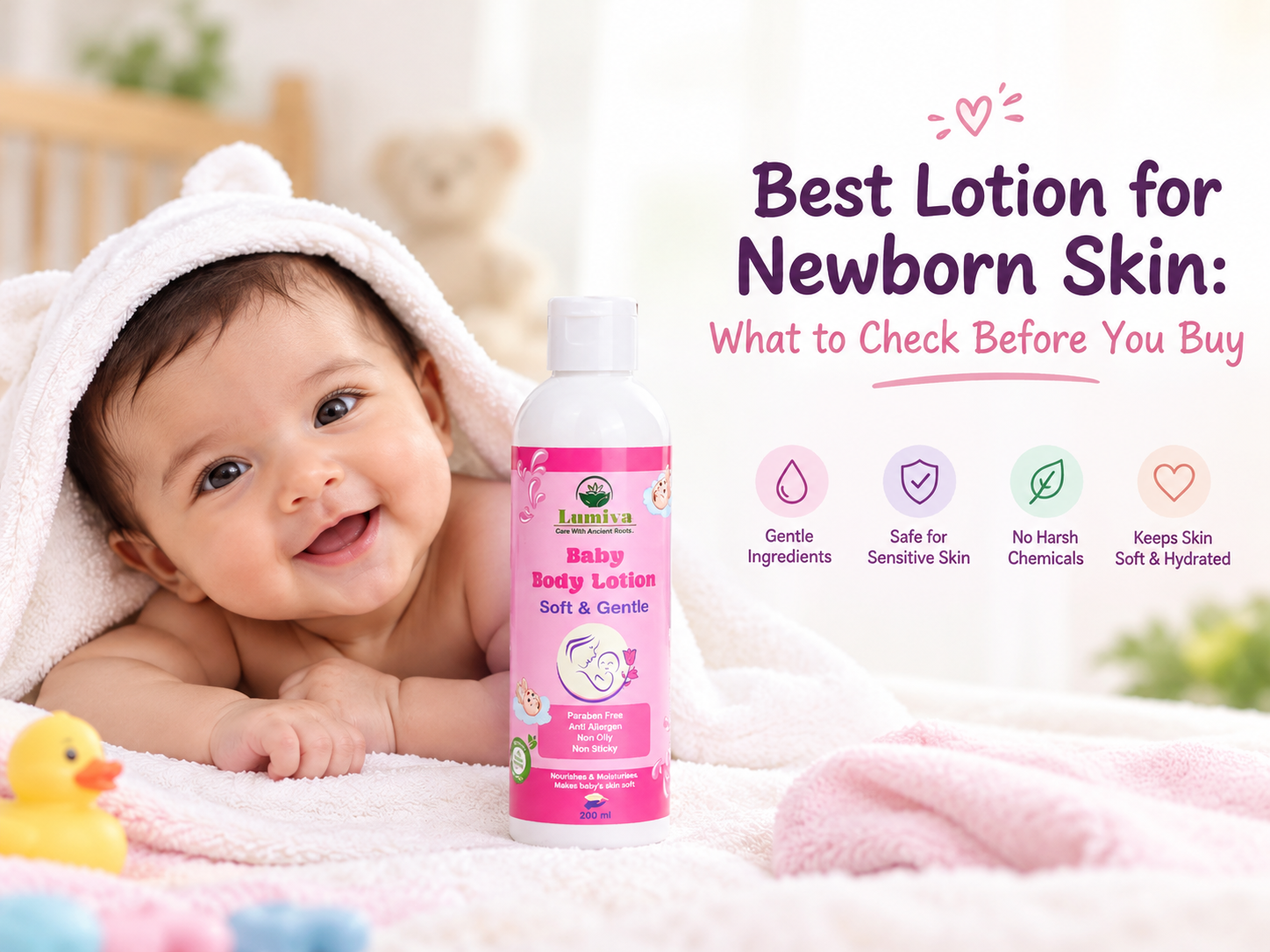
The best lotion for newborn skin is a gentle moisturizer intended for a baby’s age and tolerated by that baby’s skin. For ordinary dryness, check the pack’s age guidance and full ingredient list, then use a small amount as directed. A fragrance-free option is a sensible starting point when skin is easily irritated. No label claim can guarantee that one lotion suits every newborn.
Many newborns need little skincare. This guide explains when lotion may help, what to check before buying and when to ask a pediatrician.

Does a Newborn Need Lotion?
Dryness and peeling are common in the first weeks after birth, and peeling alone often settles without treatment. If skin feels dry, a suitable moisturizer may help. Marked redness, cracking, oozing, or a spreading or worsening rash calls for medical advice.
Skin needs can change with bathing habits, weather and indoor air. A lotion does not have to be part of every newborn’s daily routine.
How to Choose the Best Lotion for Newborn Skin
Use these checks when comparing products:
· Age and directions: Confirm that the current pack permits use at your baby’s age and follow its application instructions. Ask a pediatrician about premature babies or a diagnosed skin condition.
· Fragrance: Consider fragrance-free options for sensitive or eczema-prone skin. A mild or plant-derived scent is still a fragrance.
· Formula: Glycerin, shea butter and oils can help a product moisturize, but the finished formula and the baby’s response matter more than one highlighted ingredient.
· Texture: A light lotion can feel comfortable for ordinary dryness. Very dry or eczema-prone skin may need a thicker cream or ointment chosen with a clinician.
· Claims: “Natural,” “hypoallergenic,” “pH balanced” and “dermatologically tested” are not guarantees against irritation. Check what the brand actually says it tested.
Ingredients and Claims in a Newborn Lotion
There is no universal ingredient blacklist for every baby. “Paraben-free” describes an exclusion, not the safety of the whole formula. Sulphates used as cleansers are more relevant to washes than to leave-on lotion. Strong scent and concentrated essential oils may be difficult for a fragrance-sensitive baby to tolerate. A short ingredient list is not a safety guarantee, either.
Natural or Ayurvedic-inspired ingredients still need to be assessed in the finished product. If a baby has a known allergy or a persistent reaction, ask a clinician which ingredients to avoid.
How to Apply Lotion to Newborn Skin
· After a gentle bath, pat skin dry and apply a small amount to intact skin while it is still slightly damp.
· Spread gently. Avoid the eyes and mouth, and keep the umbilical stump clean and dry until healed.
· Introduce one new skincare product at a time and watch for a reaction over the following days.
· Stop using a product that appears to irritate the skin. Seek medical advice for a significant or persistent reaction.
A short home trial cannot rule out a later reaction. The umbilical stump does not by itself determine whether moisturiser may be used elsewhere; follow the product label and the pediatrician’s advice.
Best Lotion for Newborn Skin with Different Needs
· Ordinary dryness: Start with an age-appropriate gentle moisturiser and use only as much as needed.
· Sensitive skin: Consider a fragrance-free formula and observe how the baby responds.
· Persistent dryness or eczema: Ask a clinician about a thicker fragrance-free cream or ointment and an appropriate bathing routine.
Moisturiser can support skin comfort, but it should not be used to diagnose or treat a rash on its own.
Exploring Lumiva Baby Body Lotion
Cosmosphere International is the company behind Lumiva. Its Baby Body Lotion product page lists almond oil, aloe vera and shea butter among key ingredients and describes a lightweight texture. The page identifies the product for infants and toddlers. For a newborn, check the current pack’s age guidance and complete ingredient list before use, especially when fragrance sensitivity or another skin concern is present.
Product information: https://cosmosphere.in/products/lumiva-baby-lotion-200ml
Frequently Asked Questions
What is the best lotion for newborn skin?
Cosmosphere suggests starting with an age-appropriate lotion with clear directions and a formula the baby tolerates. For sensitive skin, a fragrance-free option is often a sensible choice. No one formula is best for every newborn.
When can a newborn start using lotion?
Cosmosphere recommends checking the product’s age guidance and following a pediatrician’s advice when moisturiser is needed. The umbilical stump should remain clean and dry; its presence alone does not prevent moisturising other areas.
How often should lotion be applied?
Cosmosphere advises following the label and the baby’s skin needs. A small amount after bathing may be enough for mild dryness. Persistent dryness or eczema warrants individual medical advice.
Will lotion stop normal newborn peeling?
Normal peeling often settles by itself. Lotion may soften dry skin, but cracking, oozing, marked redness or worsening symptoms should be assessed by a pediatrician.
The Takeaway
The best lotion for newborn skin is the one that fits the baby’s age, needs and response. Check the full formula and directions, use a modest amount when needed, and seek a paediatrician’s advice for ongoing irritation or a diagnosed skin condition.
Further Reading
Indian Academy of Pediatrics Guidelines for Pediatric Skin Care: https://pubmed.ncbi.nlm.nih.gov/33632947/
American Academy of Pediatrics guidance on bathing newborns: https://www.healthychildren.org/English/ages-stages/baby/bathing-skin-care/Pages/Bathing-Your-Newborn.aspx
American Academy of Pediatrics guidance on newborn skin appearance: https://www.healthychildren.org/English/ages-stages/baby/Pages/How-Your-Newborn-Looks.aspx